



When starting a website, one of the first decisions you’ll face is choosing the right hosting type. Among all the options available, shared hosting remains the most popular and beginner-friendly solution. It’s affordable, simple to manage, and suitable for a wide range of small to medium websites.
In this detailed guide, we’ll explore what shared hosting is, how it works, its advantages and disadvantages, and who should use it.
What is Shared Hosting
Shared hosting is a type of web hosting where multiple websites share the same physical server and its resources, including CPU, RAM, storage, and bandwidth. Each website has its own separate account, but all accounts rely on the same server environment.
Think of it like renting an apartment in a large building. You have your own private space, but utilities such as water, electricity, and maintenance are shared among all residents.
How Shared Hosting Works
In a shared hosting setup:
- A single server hosts hundreds or even thousands of websites
- The hosting provider manages server maintenance, security, and updates
- Each website gets a predefined portion of server resources
- Users manage their site through a control panel such as cPanel or a custom dashboard
Because costs are shared among many users, hosting providers can offer plans at very low prices.
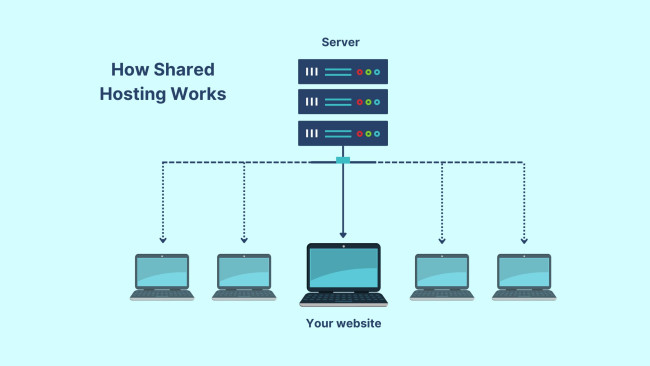
Key Features of Shared Hosting
Shared hosting plans usually include the following features:
Easy Setup and Management
Most shared hosting services come with one-click installers for popular platforms like WordPress. You don’t need technical expertise to launch your website.
Affordable Pricing
Shared hosting is the most cost-effective hosting option available. Plans often start at just a few dollars per month, making it ideal for beginners and small projects.
Built-In Maintenance
The hosting company takes care of server updates, security patches, and hardware management. This allows website owners to focus on content and growth instead of technical issues.
Control Panel Access
Users typically get access to a control panel where they can manage files, databases, emails, and domains easily.
Advantages of Shared Hosting
Shared hosting offers several benefits, especially for new website owners:
- Low cost and budget-friendly
- Beginner-friendly with minimal technical requirements
- Quick website setup
- Hosting provider handles server management
- Suitable for blogs, portfolios, and small business websites
For many users, shared hosting provides everything needed to get online quickly and efficiently.
Disadvantages of Shared Hosting
Despite its benefits, shared hosting also has limitations:
Limited Resources
Because resources are shared, heavy traffic on one website can affect the performance of others on the same server.
Performance Constraints
Shared hosting may struggle with high-traffic websites, large databases, or resource-intensive applications.
Less Control
Users have limited control over server configurations compared to VPS hosting or dedicated hosting.
Scalability Challenges
As your website grows, you may eventually outgrow shared hosting and need to upgrade to a more powerful solution.
Who Should Use Shared Hosting?
Shared hosting is best suited for:
- Beginners building their first website
- Personal blogs and portfolios
- Small business websites
- Informational or brochure-style sites
- Low to moderate traffic websites
If your website doesn’t require heavy processing power or advanced customization, shared hosting is often more than enough.
Shared Hosting vs Other Hosting Types
Compared to other hosting options:
- Shared hosting is the cheapest and easiest to manage
- VPS hosting offers more resources and control
- Dedicated hosting provides maximum performance but at a higher cost
- Cloud hosting offers scalability and flexibility
Shared hosting is typically the first step before upgrading to more advanced hosting as your website grows.
Is Shared Hosting Good for SEO?
Yes, shared hosting can be good for SEO if the hosting provider maintains reliable uptime, fast servers, and proper security. However, performance issues caused by overcrowded servers may negatively impact page speed, which is an important ranking factor.
Choosing a reputable hosting provider is key to maintaining good SEO performance on shared hosting.
Final Thoughts
Shared hosting remains one of the best choices for beginners and small websites due to its affordability, ease of use, and low maintenance requirements. While it may not be suitable for high-traffic or resource-heavy websites, it provides an excellent starting point for most online projects.
If you’re launching a new website and want a simple, cost-effective solution, shared hosting is a smart and practical choice.