

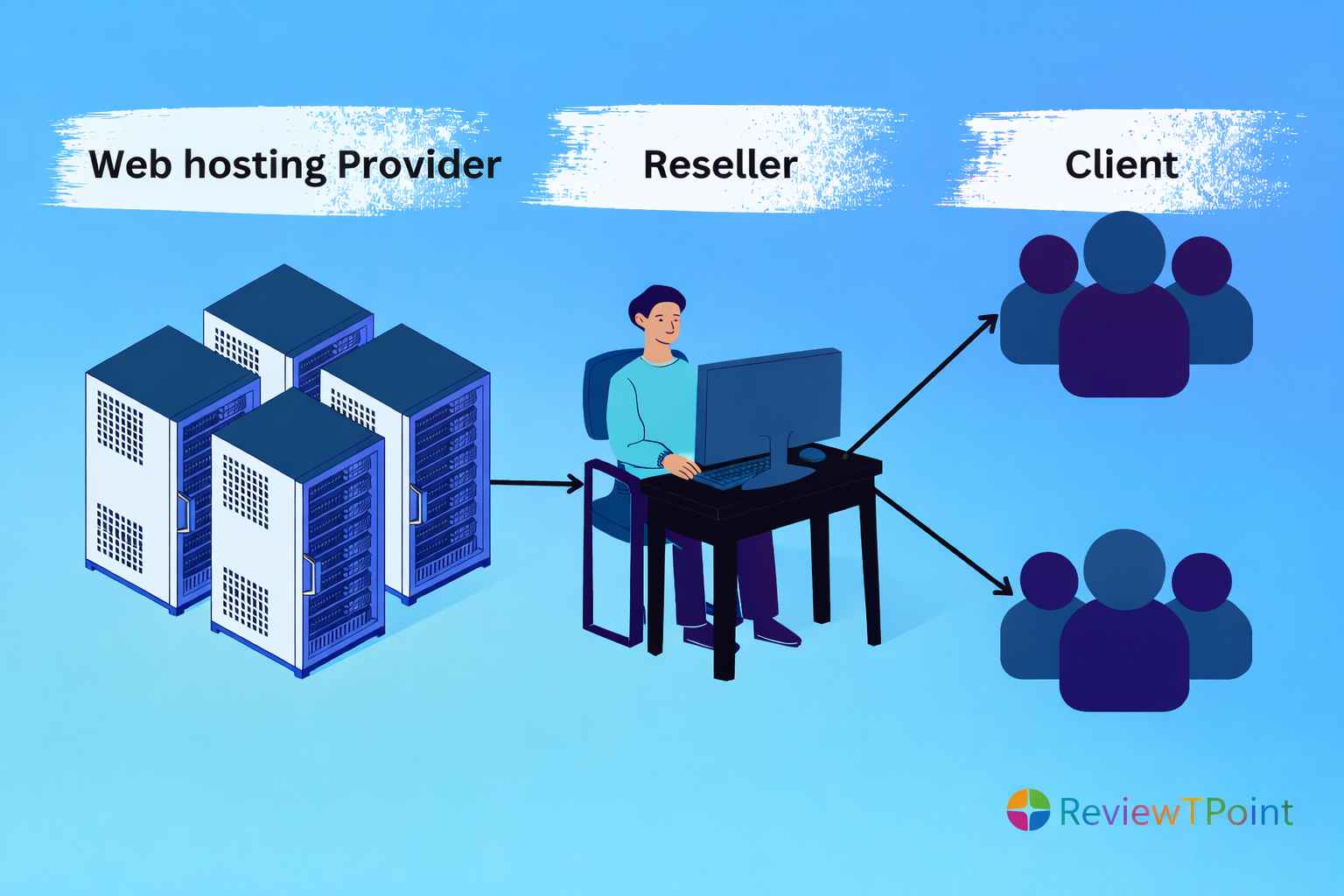
Reseller hosting lets you buy server space in bulk and sell smaller portions to your own customers under your brand. This business model is perfect for web developers, digital agencies, and entrepreneurs who want to add hosting services to their revenue streams without managing servers themselves.
- Understanding Reseller Hosting Fundamentals
- What Reseller Hosting Is and How It Works
- Key Components That Make Reseller Hosting Functional
- The Business Model Behind Reseller Hosting Success
- How to Start Your Reseller Hosting Business
- Purchasing Hosting Resources from Parent Companies
- Creating Custom Hosting Plans for Different Client Needs
- Selling Services Under Your Own Brand
- Providing Customer Support and Managing Client Relationships
- Control Panel Solutions (cPanel and Plesk)
- White Labeling for Brand Customization
- Billing and Automation Systems
- Security and Backup Solutions
- Linux Reseller Hosting: The Cost-Effective Choice
- Open-Source Benefits and Cost Savings
- High Performance and Scalability Advantages
- Compatibility with Popular Web Technologies
- Security and Stability Features
- Windows Reseller Hosting: The Microsoft Solution
- Seamless Integration with Microsoft Technologies
- Support for ASP.NET and MS SQL Applications
- User-Friendly Interface and Management Tools
- Active Directory and Windows Authentication
- Linux vs Windows Reseller Hosting Comparison
- Cost Analysis and Pricing Differences
- Performance and Resource Usage Comparison
- Security Features and Vulnerability Assessment
- Compatibility and Technology Support
- Best Reseller Hosting Providers
- Top Reseller Hosting Companies in 2026
- What to Look for in a Reseller Hosting Provider
- Specialized Reseller Hosting Solutions
- Frequently Asked Questions FAQs
- Conclusion
This guide is designed for beginners who want to understand the reseller hosting business and start their own hosting company. You’ll learn exactly how reseller hosting works and what tools you need to succeed.
We’ll walk you through the fundamentals of reseller hosting and show you how to launch your business step by step. You’ll also discover the key differences between Linux and Windows reseller hosting platforms, so you can pick the right option for your target customers. Plus, we’ll cover the essential tools and features that make managing multiple client accounts simple and profitable.
Understanding Reseller Hosting Fundamentals
What Reseller Hosting Is and How It Works
Reseller hosting is a business model where individuals or companies purchase hosting resources from a provider and resell them to their clients. This arrangement creates a three-tier system: the original hosting provider, the reseller, and the end customer. The process begins when a hosting provider rents out server resources including disk space, bandwidth, and CPU power to a reseller. The reseller then takes these allocated resources and creates customized hosting plans tailored to their target market’s specific needs.
The operational mechanism is straightforward yet powerful. Once the reseller receives their hosting allocation, they can divide it into smaller packages and sell these to end customers at competitive prices. This model is particularly effective for web designers, developers, and IT professionals who want to generate additional income while offering value-added services to their existing client base. The beauty of reseller hosting lies in its ability to eliminate the need for significant capital investment in expensive hardware or data center facilities, making it accessible to entrepreneurs and small businesses.
Key Components That Make Reseller Hosting Functional
Several essential components work together to make reseller hosting functional and profitable. The control panel serves as the central management hub, allowing resellers to create, modify, and manage customer accounts efficiently. This administrative interface typically provides tools for monitoring resource usage, setting up email accounts, and managing databases.
White labeling represents another crucial component, enabling resellers to brand the hosting services as their own. This feature removes any reference to the original hosting provider, allowing resellers to maintain complete brand control and build customer loyalty under their own company name.
Billing and automation systems streamline the business operations by handling customer invoicing, payment processing, and account provisioning automatically. These systems reduce manual workload and ensure consistent service delivery to end customers.
Security and backup solutions form the foundation of reliable hosting services. These components protect customer data, ensure service continuity, and provide peace of mind for both resellers and their clients through regular data backups and robust security measures.
The Business Model Behind Reseller Hosting Success
The reseller hosting business model creates value for all parties involved through strategic resource allocation and service specialization. Resellers can leverage their existing relationships and industry expertise to offer hosting services without the technical complexity of managing physical infrastructure. This approach allows them to focus on customer service, marketing, and business development while the hosting provider handles the technical backend operations.
The success of this model depends on the reseller’s ability to identify market opportunities and create competitive hosting packages. By understanding their target audience’s specific needs, resellers can customize plans that offer better value or more specialized features than generic hosting offerings. This targeted approach enables resellers to command premium prices while building long-term customer relationships based on personalized service and industry expertise.
How to Start Your Reseller Hosting Business
Purchasing Hosting Resources from Parent Companies
The foundation of any successful reseller hosting business begins with acquiring resources from a parent hosting company. This initial step involves purchasing hosting resources such as disk space, bandwidth, CPU power, and memory from established hosting providers who maintain the underlying infrastructure. Resellers have the flexibility to choose from various hosting types including shared hosting plans, virtual private servers, dedicated servers, or cloud hosting solutions depending on their target market and budget constraints.
The beauty of this arrangement lies in the division of responsibilities – while the parent company handles all technical backend operations, server maintenance, and infrastructure management, resellers can focus their efforts on resource distribution and client acquisition. This partnership model allows entrepreneurs to enter the hosting market without the substantial capital investment typically required for physical servers and data center operations.
Creating Custom Hosting Plans for Different Client Needs
Once you’ve secured hosting resources, the next crucial step involves developing customized hosting plans that cater to diverse client requirements. Reseller hosting empowers you to define specific parameters for each plan, including storage allocation, bandwidth limits, the number of websites permitted, database restrictions, email account quotas, and SSL certificate inclusions.
Most successful resellers create tiered hosting structures with multiple service levels such as Basic, Professional, and Premium packages. This approach allows you to target different market segments while maximizing revenue potential. Additionally, you can offer value-added services and add-ons like extra storage space, dedicated IP addresses, or enhanced security features to increase your profit margins.
Control panels like cPanel or Plesk serve as essential tools for managing these custom plans, providing intuitive interfaces for both resellers and their clients to manage hosting resources effectively.
Selling Services Under Your Own Brand
White-labeling represents one of the most attractive aspects of reseller hosting, enabling you to sell hosting services under your own brand identity. This branding opportunity extends beyond simple logo placement – you can customize control panels, client portals, websites, and support interfaces with your company’s colors, logos, and brand messaging.
The white-labeling approach ensures that your clients interact exclusively with your brand, often remaining completely unaware of the parent hosting provider managing the backend infrastructure. This brand ownership allows you to establish your own pricing strategies and profit margins while building direct customer relationships and brand loyalty.
Providing Customer Support and Managing Client Relationships
Customer support and relationship management form the cornerstone of your reseller hosting business success. The level of support responsibility varies significantly depending on your chosen arrangement with the parent company. Fully managed solutions involve the parent company handling all backend technical issues, while partially managed setups require resellers to handle client-facing support with parent company assistance for infrastructure problems. Self-managed arrangements place complete support responsibility on the reseller.
Support delivery typically occurs through multiple channels including live chat, email correspondence, telephone support, or ticketing systems. Many parent companies offer white-labeled support services, allowing their technical expertise to be delivered under your brand name, ensuring consistent service quality while maintaining your brand integrity throughout the customer experience.
Control Panel Solutions (cPanel and Plesk)
Control panels serve as the backbone of successful reseller hosting operations, with cPanel and Plesk emerging as the industry’s leading solutions. These powerful management interfaces enable resellers to efficiently create and manage customer accounts while providing comprehensive resource allocation capabilities. Through these control panels, resellers can seamlessly manage domains, create email accounts, and configure various hosting settings without requiring extensive technical expertise.
The beauty of these control panel solutions lies in their dual accessibility approach. While resellers gain administrative control over all client accounts, customers also receive their own dedicated control panel interface. This empowers clients to independently manage their websites and hosting configurations, reducing the support burden on resellers while enhancing customer satisfaction and self-service capabilities.
White Labeling for Brand Customization
White labeling represents a crucial feature that transforms generic reseller hosting into a professional, branded service offering. This powerful customization capability allows resellers to present the hosting service as their own brand rather than displaying the original provider’s identity. Through white labeling, resellers can completely customize the control panel interface, website appearance, and all customer communications with their unique logo, brand name, and distinctive color scheme.
This branding consistency plays a vital role in building strong brand identity and establishing customer trust. When clients interact with a fully branded hosting environment, they develop stronger loyalty to the reseller’s business rather than the underlying hosting provider, creating valuable long-term customer relationships.
Billing and Automation Systems
Modern reseller hosting relies heavily on sophisticated billing and automation platforms, with WHMCS (Web Host Manager Complete Solution) and Blesta leading the market. These comprehensive tools revolutionize how resellers manage customer accounts and payment processing by automating numerous time-consuming administrative tasks.
These platforms excel at automating account creation processes, ensuring new customers receive immediate access to their hosting services upon payment completion. The automation extends to invoice generation, payment reminder systems, and detailed resource usage tracking. Additionally, these systems handle subscription renewal management, maintaining seamless service continuity for all clients while reducing manual administrative overhead.
Security and Backup Solutions
Security and backup solutions form the foundation of reliable reseller hosting services, protecting both reseller businesses and client data. Hosting providers typically offer comprehensive security packages that include DDoS protection to defend against malicious attacks, advanced malware scanning capabilities, SSL certificates for secure data transmission, and automatic backup systems for data recovery.
These security features serve a dual purpose for resellers. Beyond protecting client data and ensuring service reliability, they present valuable upselling opportunities. Resellers can offer these advanced security and backup features as premium services to their clients, creating additional revenue streams while delivering enhanced value and peace of mind to customers who require enterprise-level protection.
Linux Reseller Hosting: The Cost-Effective Choice
Open-Source Benefits and Cost Savings
Linux stands as the most cost-effective foundation for reseller hosting due to its open-source nature. As an open-source operating system, Linux is completely free to use and modify, which creates substantial cost advantages for reseller hosting providers. Unlike proprietary alternatives such as Windows, Linux requires no licensing fees for the operating system itself or for essential web development software like PHP and MySQL.
This cost structure enables hosting providers to pass significant savings directly to resellers, who can then offer competitive pricing to their own clients. The absence of licensing costs means that resellers can maintain healthy profit margins while still providing affordable hosting solutions to their customers. This financial advantage becomes particularly important when competing in price-sensitive markets or when targeting budget-conscious clients.
High Performance and Scalability Advantages
Linux servers deliver exceptional performance characteristics that make them ideal for reseller hosting environments. These servers are renowned for their ability to efficiently handle large traffic volumes without compromising speed or responsiveness. The architecture of Linux allows it to utilize fewer system resources, including CPU and memory, compared to Windows-based systems.
This efficient resource utilization translates directly into faster processing speeds and better server response times for websites hosted on Linux platforms. Additionally, Linux servers provide robust support for load balancing, which becomes crucial as your reseller hosting business grows. The scalability advantages mean that as your client base expands, you can easily scale resources to accommodate increased demand without experiencing performance degradation.
Compatibility with Popular Web Technologies
Linux reseller hosting demonstrates exceptional compatibility with the most widely used open-source web development technologies. The platform provides native support for PHP, MySQL, and Python, which form the backbone of countless web applications and websites. Furthermore, Linux hosting environments support additional programming languages including Perl and Ruby, expanding the range of applications that can be hosted effectively.
This broad technology compatibility makes Linux reseller hosting particularly well-suited for popular content management systems such as WordPress, Joomla, and Drupal. Since these CMS platforms power millions of websites globally, offering Linux-based hosting ensures that your reseller hosting business can serve a vast majority of potential clients without compatibility concerns.
Security and Stability Features
Linux hosting platforms are built with robust security and stability features that ensure reliable performance for reseller hosting operations. The open-source nature of Linux creates a unique security advantage through its active community of developers who continuously identify and address potential vulnerabilities. This collaborative approach to security maintenance means that security patches and updates are typically deployed rapidly.
Linux servers incorporate comprehensive security features including built-in firewall support, advanced security protocols, granular file permissions, and sophisticated user privilege controls. Additionally, Linux hosting environments provide secure shell (SSH) access, enabling secure remote administration and file management. These security measures, combined with the inherent stability of the Linux operating system, contribute to exceptional uptime rates of 99.9% or higher, ensuring that your clients’ websites remain accessible and secure around the clock.
Windows Reseller Hosting: The Microsoft Solution
Seamless Integration with Microsoft Technologies
Windows reseller hosting stands out for its exceptional compatibility with the Microsoft ecosystem. Built on the Windows operating system foundation, this hosting solution provides seamless integration with essential Microsoft technologies including .NET, MS SQL, Microsoft Access, and Visual Basic. For reseller hosting providers targeting clients who rely heavily on Microsoft’s suite of applications, this integration becomes a significant competitive advantage.
The platform extends its compatibility to Microsoft Exchange, enabling businesses to maintain consistent email solutions across their infrastructure. Additionally, the integration with Microsoft Office and Outlook creates a unified working environment that many businesses find indispensable for their daily operations.
Support for ASP.NET and MS SQL Applications
When it comes to hosting applications developed with Microsoft frameworks, Windows reseller hosting often represents the only viable choice. ASP.NET applications require the specific runtime environment that Windows hosting provides, making it essential for businesses that have invested in Microsoft development technologies.
MS SQL database compatibility is another critical factor that sets Windows reseller hosting apart. Applications built around MS SQL databases function optimally in the Windows environment, ensuring superior performance and reliability. This makes Windows reseller hosting the preferred solution for clients running enterprise-level applications that depend on these Microsoft technologies.
User-Friendly Interface and Management Tools
The familiar Windows interface significantly reduces the learning curve for both resellers and their end clients. Most users are already comfortable with Windows-based systems, which translates to easier adoption and reduced support requirements for reseller hosting businesses.
The Plesk control panel, commonly bundled with Windows hosting solutions, provides an intuitive management experience. This user-friendly interface allows even non-technical users to manage their hosting accounts effectively, reducing the burden on customer support teams and enabling resellers to serve a broader client base.
Active Directory and Windows Authentication
For businesses operating within existing Microsoft network infrastructures, Windows reseller hosting offers crucial compatibility with Active Directory and Windows authentication systems. This integration capability allows seamless connection between hosted services and on-premises Microsoft environments, maintaining security protocols and user management consistency across the entire IT infrastructure.
Linux vs Windows Reseller Hosting Comparison
Cost Analysis and Pricing Differences
Linux reseller hosting presents a significantly more cost-effective solution compared to Windows alternatives. This substantial price difference stems from Linux’s open-source nature, which eliminates licensing fees for both the operating system and associated software packages. Since there are no proprietary license costs to factor into the pricing structure, hosting providers can offer Linux reseller hosting at considerably lower rates, making it an attractive option for budget-conscious entrepreneurs entering the reseller hosting market.
Windows reseller hosting, conversely, carries higher operational costs due to the proprietary nature of Microsoft’s technology stack. These elevated expenses result from Windows licensing fees and additional Microsoft software costs that hosting providers must account for in their infrastructure. These licensing expenses are inevitably passed down to resellers and ultimately to end customers, creating a pricing structure that can be 20-50% higher than comparable Linux hosting solutions.
Performance and Resource Usage Comparison
When examining performance metrics, Linux servers demonstrate superior efficiency in handling demanding workloads. These systems consistently deliver faster response times and maintain stable performance even under heavy traffic conditions. The lightweight architecture of Linux allows for optimal utilization of system resources, consuming fewer CPU cycles and memory allocations while delivering robust performance.
Windows servers face performance challenges when subjected to high traffic scenarios and resource-intensive applications. The inherent design of Windows systems requires more substantial system resources to operate effectively, including higher CPU and memory consumption. This increased resource dependency can lead to noticeable performance degradation when hosting multiple client accounts or handling traffic spikes, potentially impacting the overall user experience for reseller hosting customers.
Security Features and Vulnerability Assessment
Linux hosting platforms maintain a strong security reputation within the industry, largely attributed to their robust architectural design and the continuous security enhancements provided by the global open-source community. The collaborative nature of Linux development ensures that security vulnerabilities are quickly identified and patched, resulting in fewer exploitable weaknesses and a more secure hosting environment overall.
Windows servers present different security challenges, as they are frequently targeted by malware and sophisticated hacking attempts. The widespread use of Windows systems makes them attractive targets for cybercriminals, requiring hosting providers to implement rigorous security protocols. Regular updates and security patches are essential for maintaining Windows server security, creating additional maintenance overhead for reseller hosting providers.
Compatibility and Technology Support
Linux reseller hosting excels in supporting open-source technologies that power modern web applications. This platform offers seamless compatibility with PHP programming language, MySQL databases, Python scripting, and popular content management systems like WordPress. The extensive support for open-source technologies makes Linux hosting ideal for resellers targeting clients who use these widely-adopted web development tools.
Windows hosting specializes in supporting Microsoft’s proprietary technology ecosystem, making it the preferred choice for applications built on Microsoft frameworks. This platform provides native support for ASP.NET development, MS SQL Server databases, and various .NET applications. Resellers whose clients require Microsoft-specific technologies will find Windows hosting indispensable for delivering the necessary compatibility and performance optimization.
Best Reseller Hosting Providers
Top Reseller Hosting Companies in 2026
The reseller hosting market offers several excellent providers, each with unique strengths and pricing models. Here’s a breakdown of the most reliable options for building your hosting business.
BigRock (previously HostGator) remains a popular choice for new reseller hosting entrepreneurs. Their plans start at competitive rates and include WHM (Web Host Manager) access, free SSL certificates, and 24/7 customer support. The company’s reputation for uptime reliability makes it easier to build trust with your clients.
A2 Hosting stands out for its turbo servers and developer-friendly features. They offer both Linux and Windows reseller hosting options, with SSD storage across all plans. Their anytime money-back guarantee reduces risk for new resellers testing the waters.
InMotion Hosting provides excellent customer support and includes free website migrations for your clients. Their reseller plans come with cPanel/WHM, free SSL certificates, and a 90-day money-back guarantee. The company’s focus on business hosting makes them particularly suitable for resellers targeting small businesses.
| Provider | Starting Price | Free SSL | Support | Money-Back Gurantee |
|---|---|---|---|---|
| HostGator | $24.95/month | Yes | 24/7 | 45 days |
| A2 Hosting | $18.99/month | Yes | 24/7 | Anytime |
| InMotion | $13.99/month | Yes | 24/7 | 90 days |
| ResellerClub | $13.99/month | Yes | 24/7 | 30 days |
What to Look for in a Reseller Hosting Provider
White-label capabilities are essential for building your brand. Look for providers that allow you to customize control panels, remove their branding, and use your own company name throughout the client experience.
Scalability options matter as your business grows. The best providers offer multiple reseller hosting tiers, allowing you to upgrade resources without migrating to a new platform. This flexibility helps you serve clients with varying needs.
Technical support quality can make or break your reputation. Choose providers offering 24/7 support through multiple channels. Some companies provide priority support for resellers, which helps you resolve client issues faster.
Billing integration simplifies business management. Providers offering WHMCS or other billing software integrations automate invoicing, payment processing, and account management tasks.
Specialized Reseller Hosting Solutions
ResellerClub focuses exclusively on reseller services, offering domain registration, hosting, and digital certificates under one roof. Their platform includes marketing tools and automated billing systems designed specifically for hosting resellers.
GreenGeeks appeals to environmentally conscious resellers with their carbon-neutral hosting platform. They match energy consumption with renewable energy credits, which can be a unique selling point for your hosting business.
Regional providers often offer advantages for targeting specific geographic markets. They typically provide local data centers, native language support, and payment methods familiar to local customers.
Frequently Asked Questions FAQs
What is the difference between shared hosting and reseller hosting?
Shared hosting puts your website on a server alongside hundreds of other websites, all sharing the same resources. You’re essentially a tenant in a crowded apartment building. Reseller hosting gives you a chunk of server resources that you can divide and sell to your own customers. Think of it as buying a whole apartment building and renting out individual units.
With shared hosting, you have zero control over other accounts or server management. Reseller hosting puts you in the driver’s seat – you create hosting packages, set prices, manage customer accounts, and provide technical support. The hosting provider handles the backend server maintenance while you run the customer-facing business.
How much money can I make with reseller hosting?
Your income potential depends entirely on how many customers you acquire and what you charge them. Entry-level reseller hosting plans typically cost $15-30 monthly, and you can sell individual hosting accounts for $5-15 each. If you land 20 customers paying $10 monthly, that’s $200 in revenue against maybe $25 in costs.
Successful resellers often expand beyond basic hosting to offer web design, domain registration, SSL certificates, and maintenance services. Some generate thousands monthly by targeting local businesses or specific niches. The key is building relationships and providing excellent customer service that keeps clients happy and referring others.
Do I need technical knowledge to start reseller hosting?
Basic computer skills and willingness to learn will get you started. Most reseller hosting providers offer user-friendly control panels like WHM (Web Host Manager) and cPanel that handle the technical heavy lifting. You’ll need to understand concepts like disk space, bandwidth, email accounts, and databases, but you don’t need to be a server administrator.
Customer support becomes your biggest challenge. Clients will contact you when their websites go down, email stops working, or they need help with WordPress. Many successful resellers partner with freelance developers or learn basic troubleshooting skills over time. Starting small gives you room to grow your expertise alongside your business.
Can I use my own branding with reseller hosting?
Absolutely – this is one of reseller hosting’s biggest advantages. You can create your own hosting company brand, complete with custom logos, website design, and company name. Most providers offer white-label solutions where your customers never see the underlying hosting company’s branding.
You’ll typically get access to billing software like WHMCS that can be customized with your colors, domain name, and contact information. Some resellers even set up their own support ticket systems and knowledge bases. Your customers will believe they’re dealing directly with your company, not knowing you’re reselling someone else’s infrastructure.
What happens if my reseller hosting provider goes out of business?
This scenario highlights why choosing a stable, established provider matters tremendously. Reputable hosting companies have been around for years and offer migration assistance if they ever shut down operations. However, smaller or newer providers might disappear with little warning.
Always maintain regular backups of your customers’ websites and databases. Many resellers use automated backup services or manual backup routines to protect their clients’ data. If your provider disappears, having recent backups lets you quickly migrate accounts to a new hosting company with minimal downtime.
How do I handle customer support for my reseller hosting clients?
Customer support separates successful resellers from those who struggle. Your clients will expect prompt, knowledgeable responses when problems arise. Many resellers start by handling support themselves through email, phone, or live chat during business hours.
Common support requests include password resets, email configuration help, website backup assistance, and basic WordPress troubleshooting. Creating a knowledge base with step-by-step guides reduces repetitive questions. As your business grows, you might hire virtual assistants or partner with freelance developers to handle more complex technical issues.
Is reseller hosting profitable in 2026?
The hosting market remains competitive but profitable for resellers who find their niche. Small businesses, bloggers, and local organizations still need reliable web hosting, and many prefer working with smaller, personalized providers rather than large corporations.
Success often comes from specializing in specific markets – local restaurants, photographers, real estate agents, or nonprofit organizations. These clients value personal relationships and customized service over rock-bottom prices. Building expertise in particular industries helps you speak their language and understand their unique hosting needs.
Conclusion
Reseller hosting presents an excellent opportunity for entrepreneurs, web developers, and IT professionals to build a profitable hosting business without the massive infrastructure investment typically required. Whether you choose Linux or Windows reseller hosting, success depends on understanding your target market’s technical requirements and budget constraints. Linux reseller hosting offers superior cost-effectiveness, performance, and security for most use cases, especially those involving open-source technologies like WordPress, PHP, and MySQL. Windows reseller hosting becomes essential when your clients rely on Microsoft frameworks such as ASP.NET, MS SQL, or need seamless integration with Microsoft Office tools.
The key to thriving in the reseller hosting business lies in selecting the right platform for your specific niche, investing in quality control panel tools like cPanel or Plesk, and providing exceptional customer support. Start by evaluating your target customers’ technical needs, then choose a reliable hosting provider that offers robust white-labeling capabilities and scalable resources. With the proper foundation and strategic approach, reseller hosting can become a sustainable income stream while helping your clients establish their online presence effectively.